About
Ruwat is a joint cultural initiative launched by Taawon (Welfare Association) and the Palestinian Museum to support emerging and independent Palestinian voices, from individuals and groups alike, at home and across the Palestinian diaspora.
Ruwat offers small, flexible grants with a quick turnaround, supporting people and initiatives to create, preserve, and share authentic Palestinian stories across a range of artistic, cultural, and media forms. It backs stories rooted in Palestinian experience, individual and collective, that open up emancipatory futures and extend the reach and impact of Palestinian voices around the world.
Ruwat’s aims
To respond to the urgent need for documentation and expression
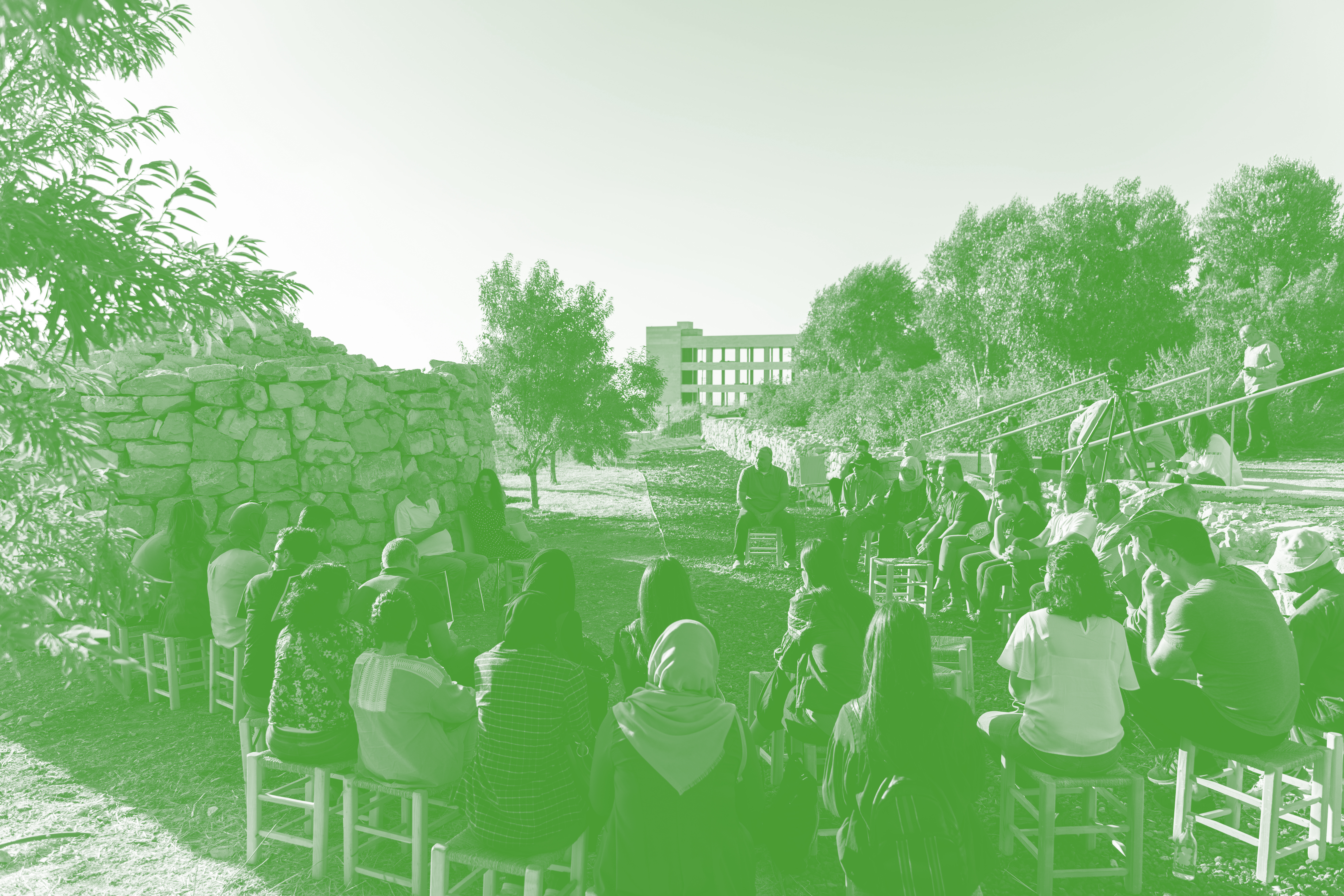
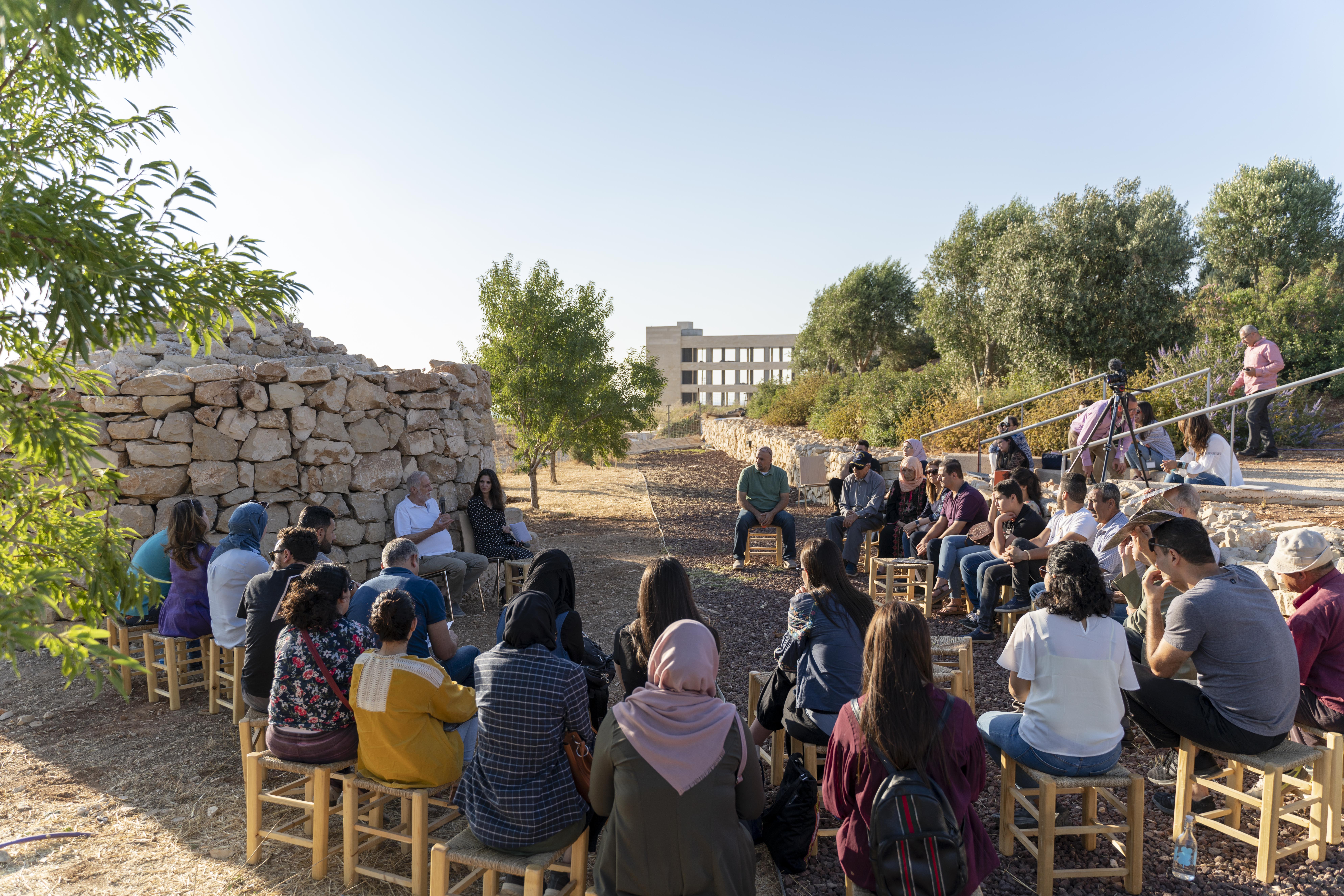
Ruwat helps youth-led and independent initiatives respond to developments affecting Palestinian lives and rights. It backs bold ideas that document events as they unfold, preserve materials and testimonies, and bring them to public attention, helping strengthen advocacy without the delays of lengthy funding processes.

To give emerging initiatives room to grow
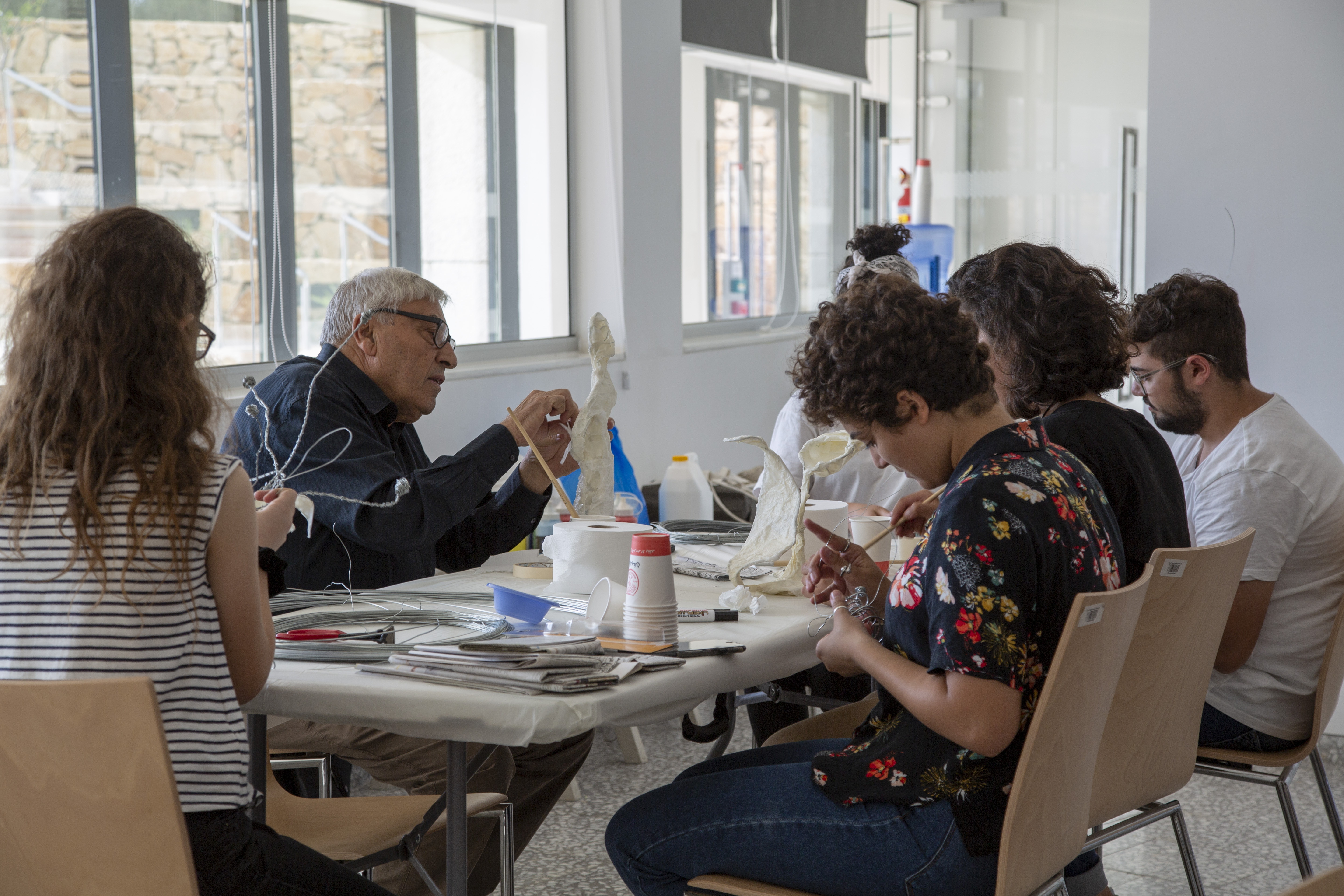
Ruwat backs ideas at an early stage. Applicants do not need prior experience in project management or budgeting. Training and guidance are built into the support, helping practitioners develop their work through to completion.
To open up new ways of telling Palestine
Ruwat supports work that preserves Palestinian heritage and memory through contemporary forms of expression. It gives artists and content creators the tools, resources, and spaces to reach audiences in Palestine, across the Arab world, and internationally.
What does
RUWAT offer?
Ruwat is more than funding. It brings together financial, creative, and practical support to help ideas take shape, develop into finished work, and find their audience. For successful applicants, that support comes in five forms:
Why Ruwat?
Why now?
As the digital landscape has rapidly expanded, independent Palestinian voices and initiatives have found new spaces and audiences for Palestinian stories, particularly amid the assault on Gaza. Yet opportunities to make and present this work still cluster around major cities and institutions, leaving many cultural practitioners outside urban centres, in refugee camps, and across the diaspora with fewer opportunities to develop and share their work.
In response, Taawon and the Palestinian Museum launched Ruwat, a joint Palestinian initiative supporting emerging cultural practitioners, both individuals and groups, to create, develop, and share original work that reflects the texture and nuance of Palestinian experience.
Areas of practice
Film and filmmaking
Theatre and performance
Podcasts and audio
Literature and publishing
Visual arts and exhibitions
Digital content and multimedia storytelling
Music
Eligibility and
grant details
Who can apply?
- Palestinian artists, content creators, and people leading independent initiatives, in Palestine and across the diaspora.
- Emerging arts and cultural groups.
- You do not need previous experience of project management or budgeting, or to have received grant funding before.
Who cannot apply?
- Employees and board members of Taawon or the Palestinian Museum, and their first-degree relatives.
- Members of Ruwat’s steering committee or assessment panel, and their first-degree relatives.
- Government bodies, political parties, and party-affiliated bodies.
- Previous Ruwat grant recipients who have not met their contractual or reporting obligations.
Available funding
Grants of US$100–US$5,000 are available, with the amount awarded tailored to the nature and needs of each project. At least ten grants will be awarded in the first funding round.
The number and value of grants may be adjusted in light of the calibre of applications received and the Fund’s overall budget. Partial funding may also be offered. Final decisions are made by the steering committee on the recommendation of the assessment panel. Successful applicants will be informed if the grant amount or approved budget items differ from those requested.
How will the grant be paid?
The grant will be paid in two instalments: 80% on signing the grant agreement with the Palestinian Museum, and the remaining 20% on submission of the final output and report. Both instalments will be paid in US dollars by bank transfer or another method agreed by both parties.
If you are awarded a grant, you will need to:
- Sign a grant agreement setting out the project outputs, timeline, and approved budget items.
- Deliver the final output within the agreed timeframe.
- Submit a narrative report of no more than two pages and a simple financial report, with copies of receipts.
- Take part in Ruwat network activities and meetings, and share photographs and other materials from your project for documentation and promotion.
- Acknowledge the support of Ruwat, Taawon, and the Palestinian Museum in the final output and in any public communications about the project.
Ruwat provides simple reporting templates and hands-on support for first-time grant recipients. Learning how to meet these requirements is part of the support Ruwat provides, not an add-on.
Evaluation criteria
Applications will be assessed by a five-member panel comprising one representative from Taawon, one from the Palestinian Museum, and three Palestinian artists and cultural practitioners. To ensure that applications are considered with an informed understanding of both the programme and the work proposed, the panel brings together institutional insight and first-hand experience of arts and cultural practice.
Whether the idea is clear and distinctive and offers a fresh perspective.
The depth and quality of the proposed work and what it could contribute to Palestinian cultural life.
How integral Palestine is to the idea, and how well the proposed work is grounded in experience or knowledge of the Palestinian context.
Whether the project can be delivered within six months, with a realistic plan, budget, and timeline.
How clearly the intended audience is defined, how appropriate the plans to present and share the work are, and how far it could reach locally and internationally.
We assess your idea, not how well it is written. Strong writing skills are not required to receive a grant.
Once applications have been assessed individually, the panel considers the selected projects as a whole to ensure a balanced geographic spread across the northern, central, and southern West Bank, including Jerusalem, as well as the Gaza Strip and Palestinian communities elsewhere; a range of areas of practice; and fair representation of women and girls and underrepresented voices.
Panel members must declare any personal or professional connection with an applicant and take no part in assessing their application.
First-round timeline
This is the first in a series of recurring cycles that will continue until 2029. If your project is not ready now, there will be future opportunities. All applicants will be notified of the outcome, regardless of whether their application was accepted or not.
1st of December 2026
Applications open
31st December 2026
Applications close
[date]
Results announced
Within [15] business days
Grant agreement and first payment
Up to 6 months
Maximum project duration
Tell your story
in your own voice
You can answer most questions in writing or by audio or video recording. A disability, limited internet access, or another barrier should not prevent you from applying. Get in touch with the Ruwat team at [email address / phone number], and we can work through the application with you over the phone.
apply nowQuestions and details
Taawon
Taawon is a nonprofit civil society organisation founded in Geneva in 1983 by Palestinian and Arab businesspeople and intellectuals. It has since grown into a major organisation serving Palestine and Palestinian refugee camps in Lebanon, supporting more than one million Palestinians each year, around half of them women. Over more than four decades, Taawon has invested nearly US$900 million in development and relief programmes.

The Palestinian Museum
The Palestinian Museum is a nongovernmental association dedicated to supporting an open and vibrant Palestinian culture in Palestine and beyond. It presents and contributes to narratives on Palestinian history, culture, and society from fresh and critical perspectives. One of Palestine’s most significant contemporary cultural projects, it also provides spaces for creative ventures, educational programmes, and innovative research.
Fund management
The Palestinian Museum delivers the initiative, manages its digital platform and application process, and signs grant agreements with successful applicants. Taawon contributes to the initiative’s funding, governance, and promotion. A joint committee oversees the initiative, monitors the Fund’s progress, and guides its development.
Creators retain all intellectual property rights in their creative outputs. They grant Ruwat, Taawon, and the Palestinian Museum a non-exclusive licence to document, promote, and use project outputs for noncommercial purposes in support of Ruwat’s aims, with creators credited whenever their work is used.
Taawon and the Palestinian Museum are the owners of all intellectual property rights in materials created specifically for Ruwat, including the visual identity, training materials, reports, and data.
The Palestinian Museum manages Ruwat’s digital platform and holds applicants’ personal data. This data is used solely to assess applications and administer grants, with access limited to the Ruwat team and members of the assessment panel.
Applicants’ personal data will not be shared with third parties, including funders, without prior written consent from the applicant concerned. The names of unsuccessful applicants will not be published. Personal data from unsuccessful applicants will be retained for 12 months and then deleted. Applicants may request deletion of their personal data at any time by contacting [Fund email address].Many projects supported by Ruwat draw on people’s stories and testimonies. Grant recipients must therefore:
- Obtain informed, documented consent from anyone whose testimony is recorded or whose image or materials are used;
- Ensure that no material is published that could put contributors or their families at risk or expose them to persecution, and allow contributors to withdraw their testimony at any time before publication;
- Take particular care when working with children and survivors of violence, including obtaining parental or guardian consent where children are involved;
- Comply with the partner organisations’ policies on child safeguarding and protection from exploitation and abuse.
Is experience required?
No. It isn’t part of the assessment. Ruwat is designed primarily for people at an early stage in their creative practice, with training and mentoring built into the programme.
What support does Ruwat offer beyond the grant?
Ruwat offers creative and professional mentoring, support to produce, present and share your work, membership of the Ruwat network, and access to the partners’ facilities, spaces, archives, collections, equipment, networks, and expertise.
How much can I apply for, and how many grants are available?
You can apply for between US$100 and US$5,000. At least ten grants will be awarded in this round. The number of grants and the maximum award may be adjusted depending on the number and quality of applications received. Any changes will be decided by the steering committee.
Who will assess my application?
Applications are assessed by a five-member panel made up of one representative from Taawon, one from the Palestinian Museum, and three Palestinian artists and cultural practitioners. Panel members must declare any conflict of interest and take no part in assessing the application concerned.
Will I be assessed on my writing?
No. We assess your idea, not how well it is written. For questions marked audio/video, you can answer by audio or video instead of in writing. If you need help, call or WhatsApp us on [number] and we can go through the form with you.
What won’t Ruwat fund?
Ruwat does not cover:
• costs incurred before the grant agreement is signed;
• general running costs and organisational overheads;
• purchase of land or property, or construction work;
• scholarships or tuition fees for formal education;
• party-political, electoral or proselytising activities;
• purely academic research with no public-facing work; or
• activities already fully funded by another source.
Does Ruwat cover travel costs?
Yes, if travel or transport is necessary for your project. These costs must be clearly justified in your budget and approved in advance. Ruwat does not cover general travel or attendance at conferences or events unrelated to the funded project.
When will I hear the outcome of my application?
You’ll receive confirmation once you finish submitting your application. Results will be announced on [date], and all applicants will be notified of the outcome.
Will there be further rounds?
Yes. This is the first round of a programme running until 2029. Further rounds will be announced on this page.
How many applications can I submit?
You can submit one application per funding round.
What languages can I apply in?
You can apply in Arabic or English. Your project can be in any language, so choose whichever best suits your audience.
How do I submit my budget?
You can complete the budget table in the application form or upload your budget as a PDF or Excel file. There’s no set format; just make sure each item is clear and the costs are realistic. An example is included in the form.
How will the grant be paid?
The grant will be paid in two instalments: 80% when the grant agreement is signed and the remaining 20% once the final output and final report have been submitted. Payments will be made in US dollars.
What reports will I need to submit?
A short narrative report of up to two pages, a simple financial report with copies of receipts, and a copy of the final output. We’ll provide templates for both reports and help you with them if needed.
Who owns the rights to my work?
You retain all intellectual property rights in your work. Ruwat, Taawon, and the Palestinian Museum have nonexclusive permission to document and promote the work, and to use it for noncommercial purposes in support of Ruwat’s aims. You will be credited whenever your work is used.
What happens to my data?
The Palestinian Museum will use your personal data only to assess your application and administer any grant you receive. It will not share your data with third parties, including funders, without your written consent. If your application is unsuccessful, your name will not be published. You can ask for your data to be deleted at any time.